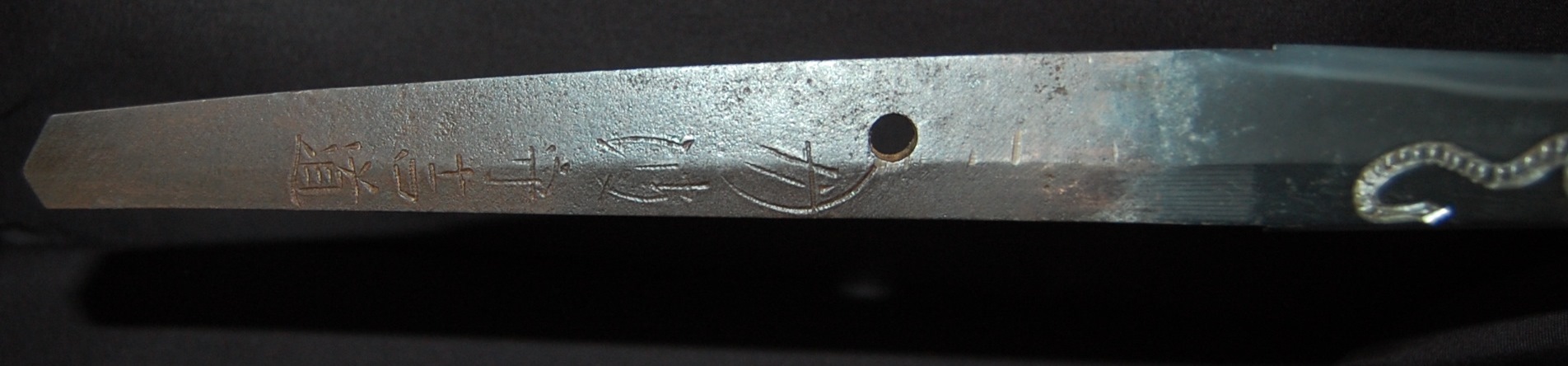
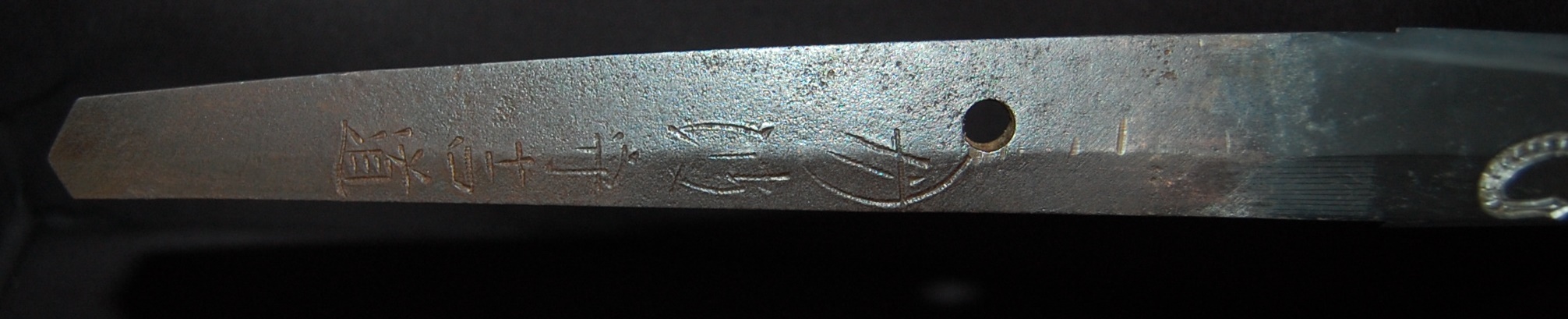
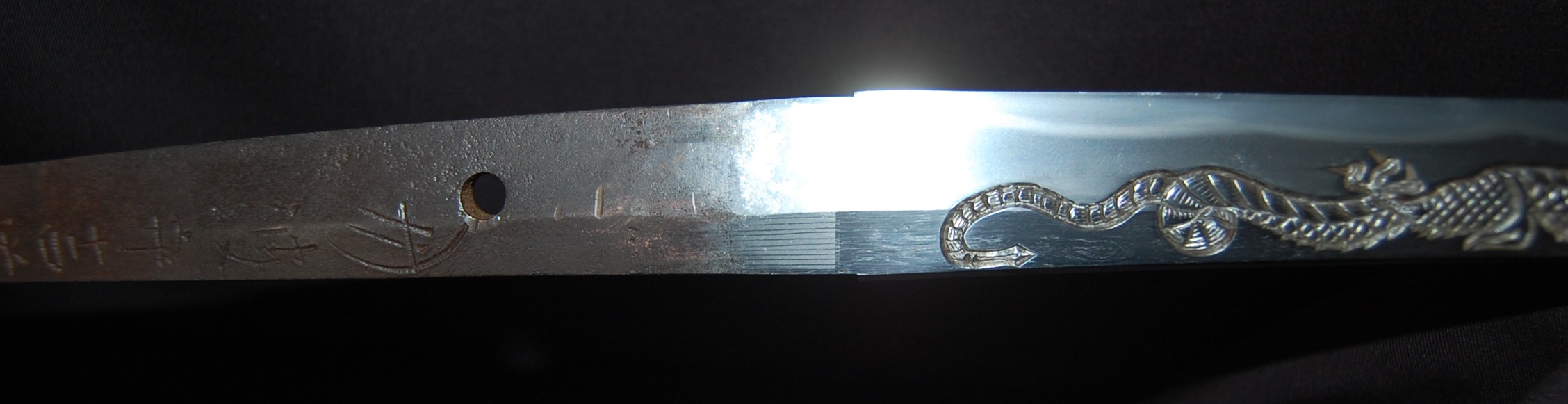
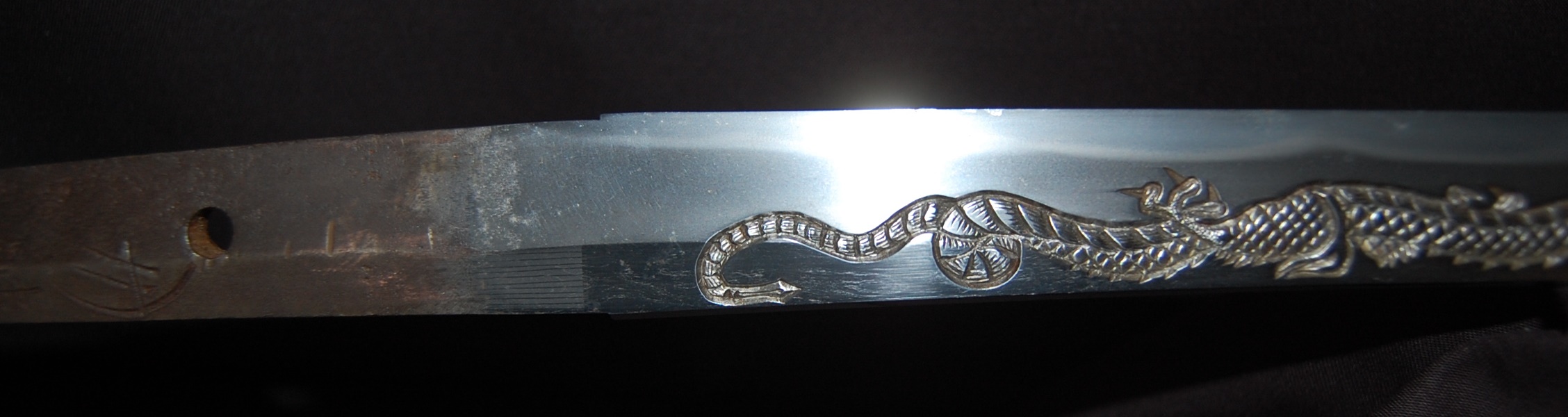
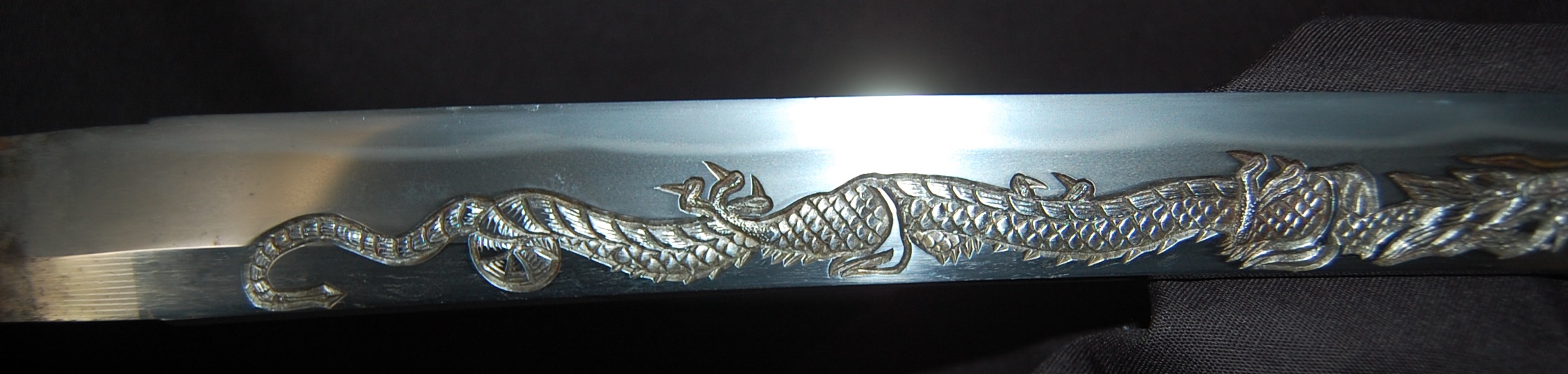
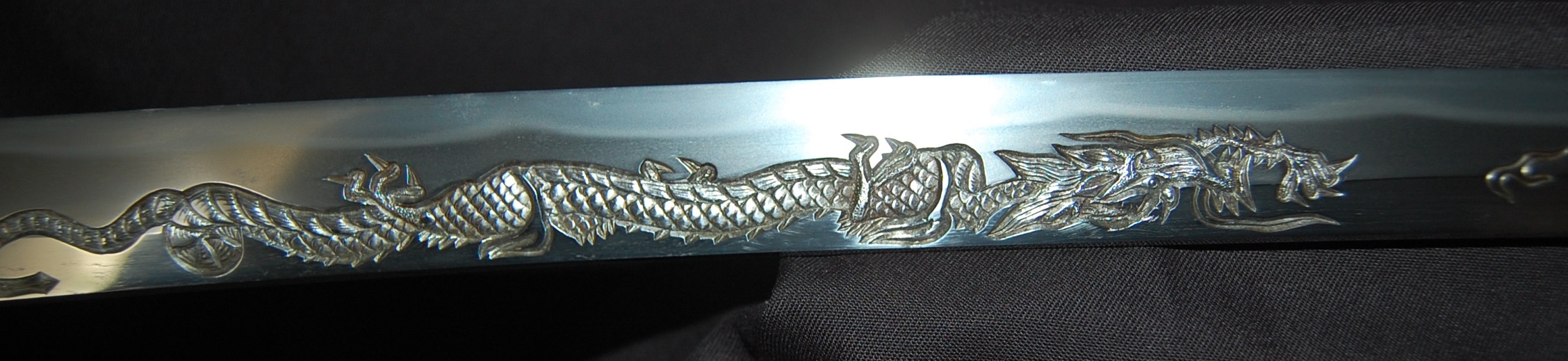
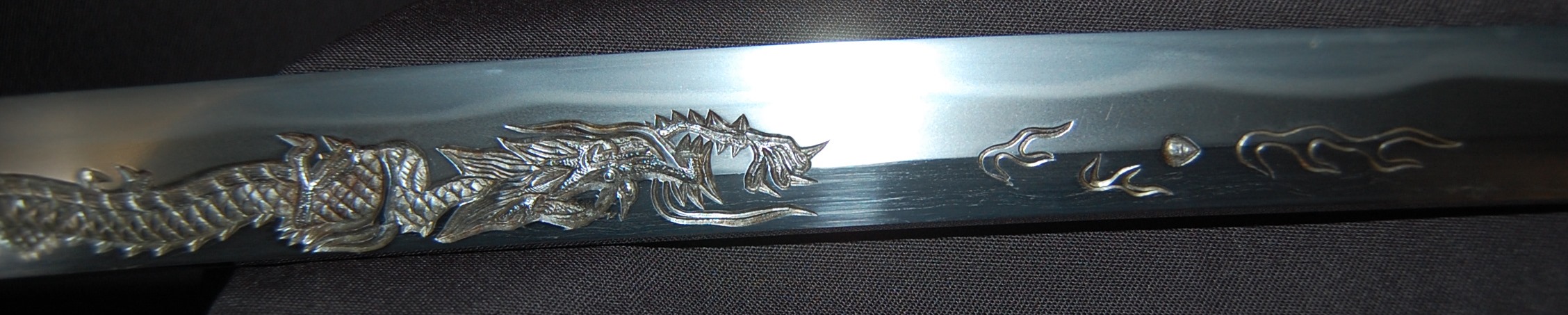
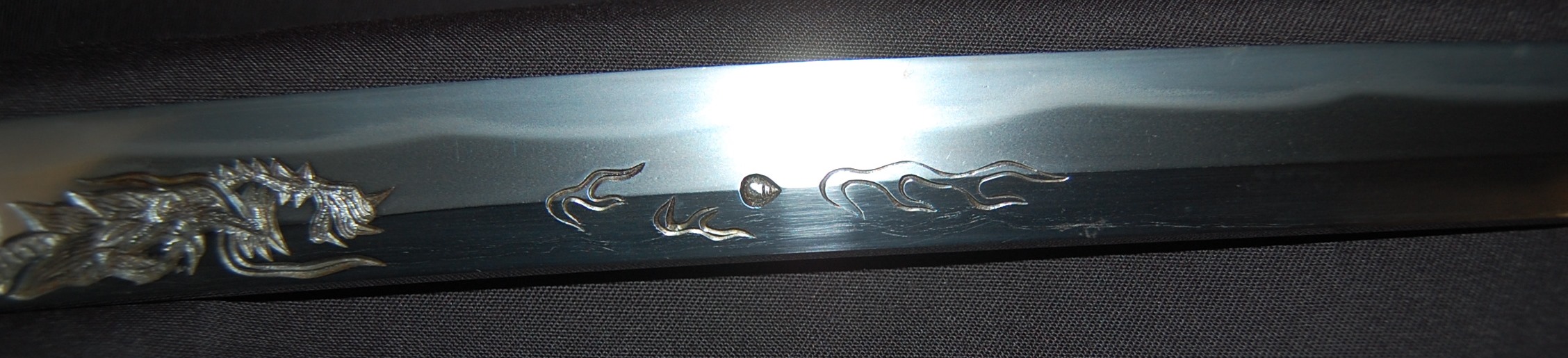
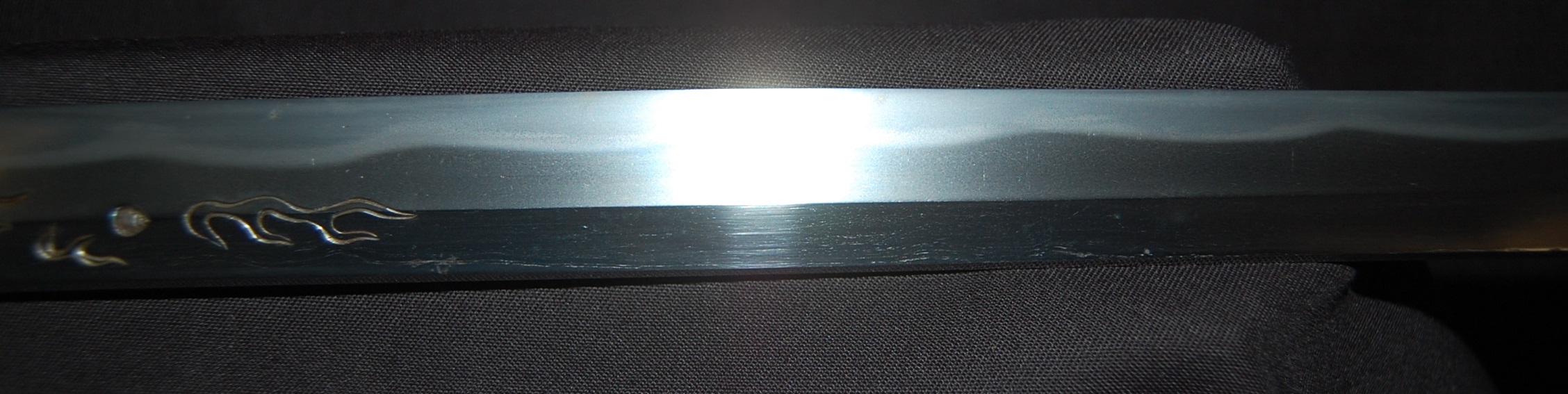
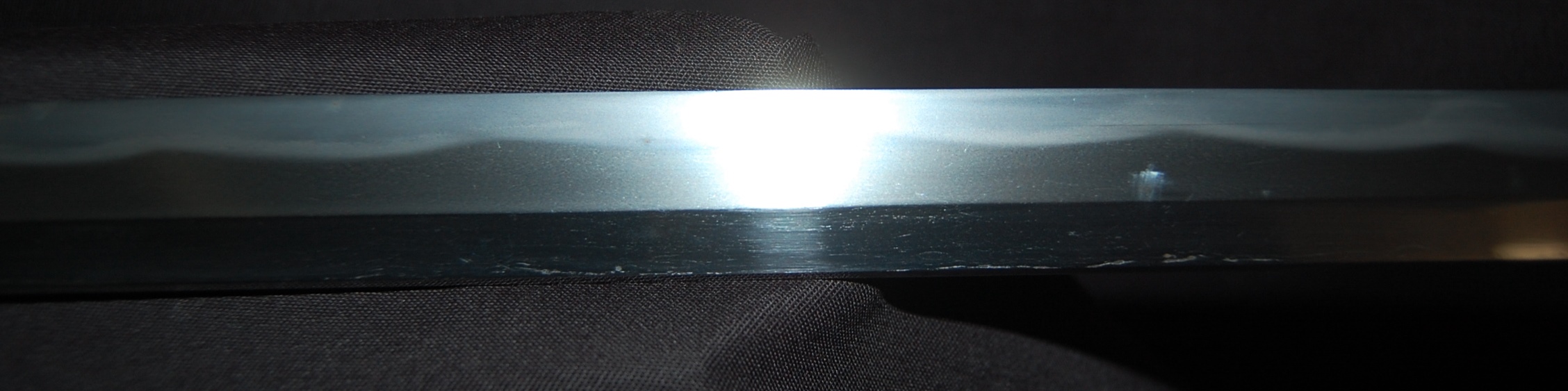
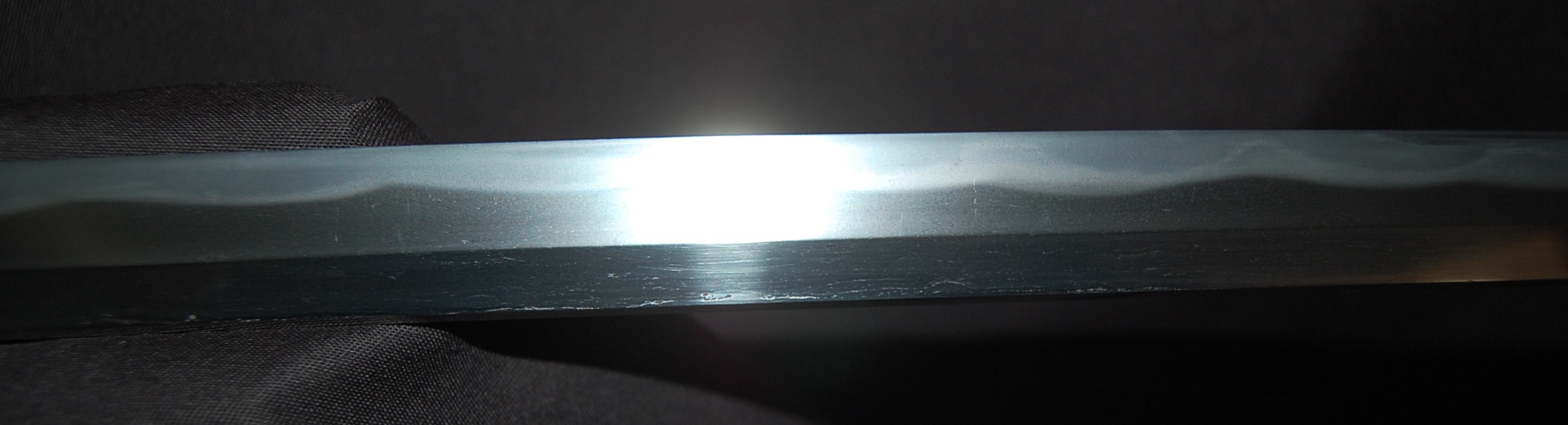
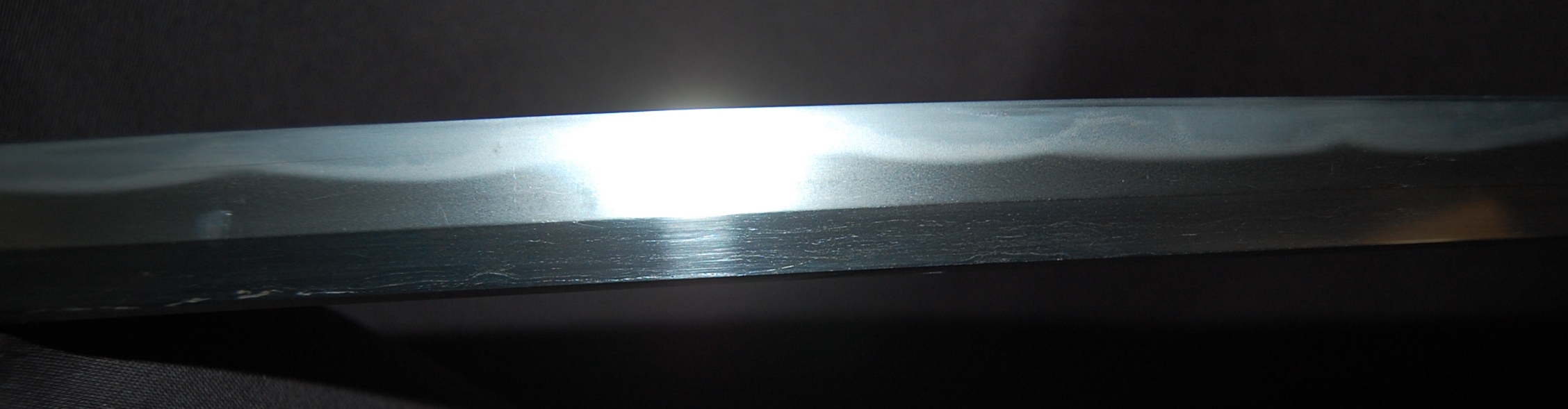
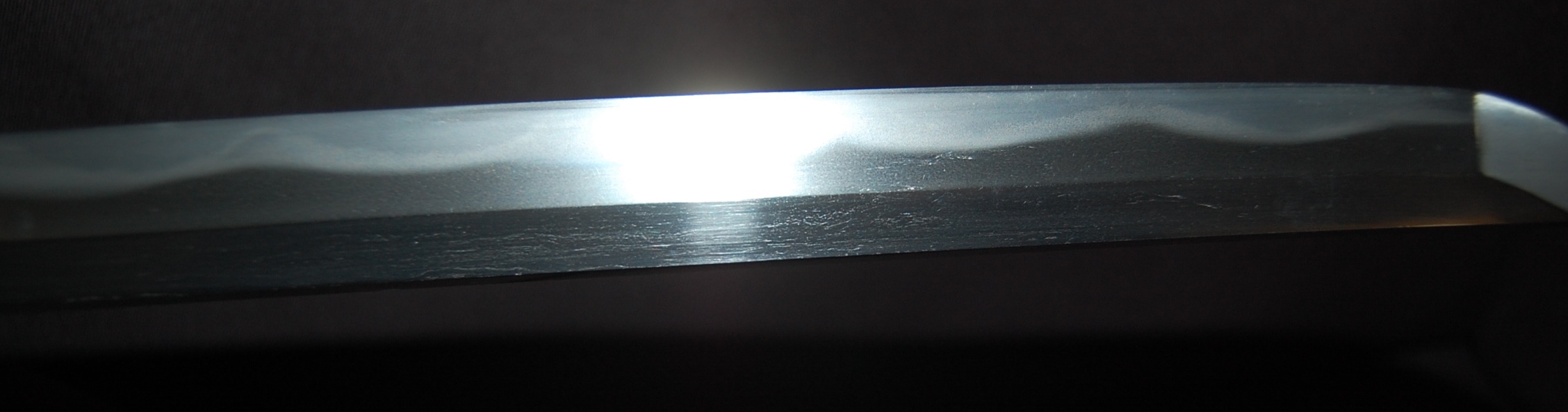
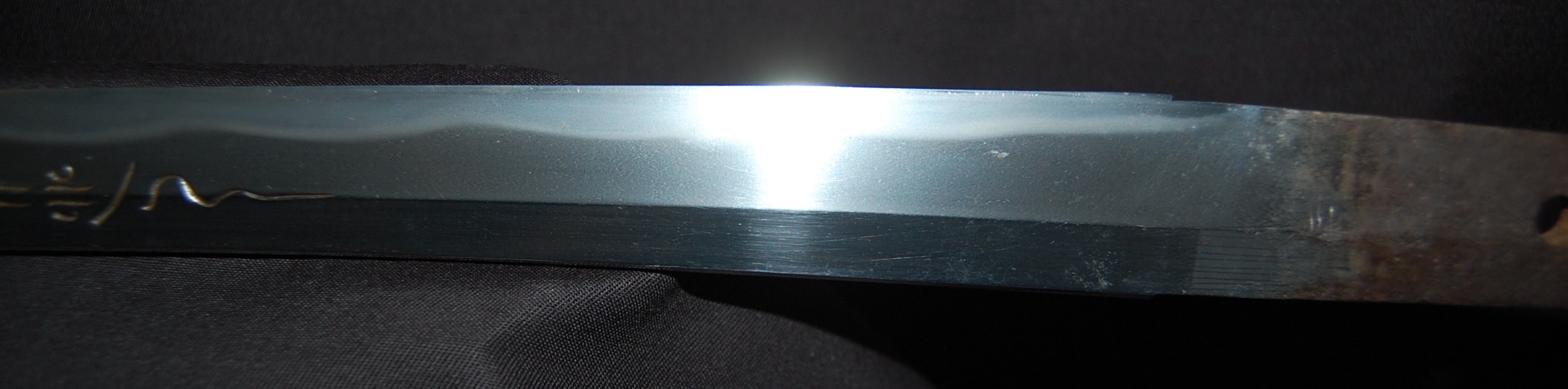
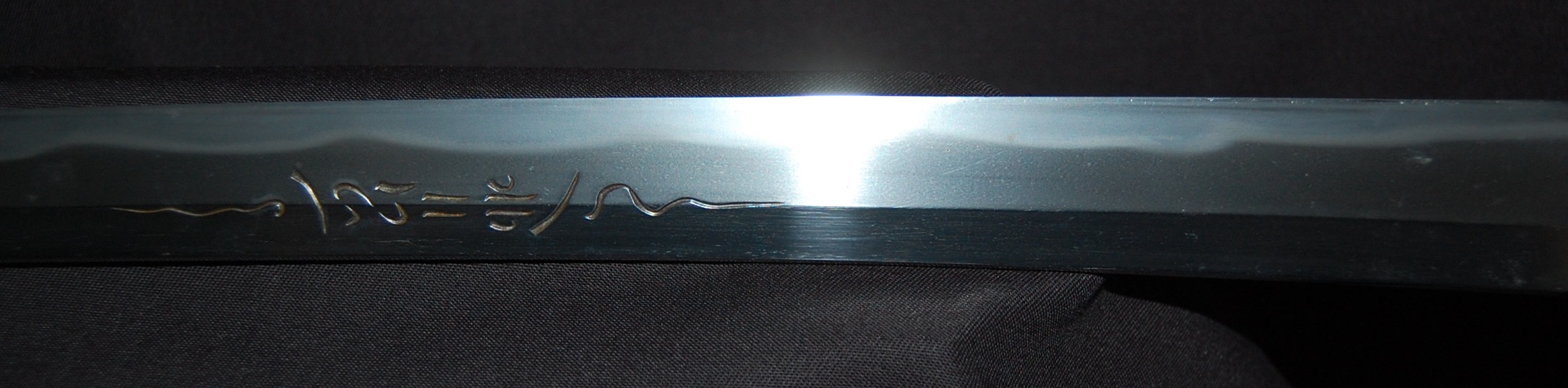
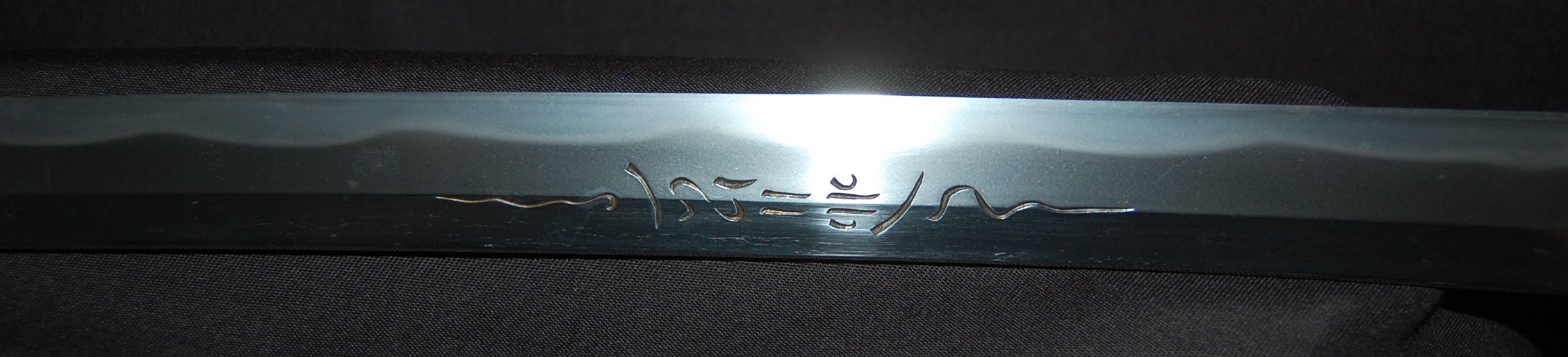
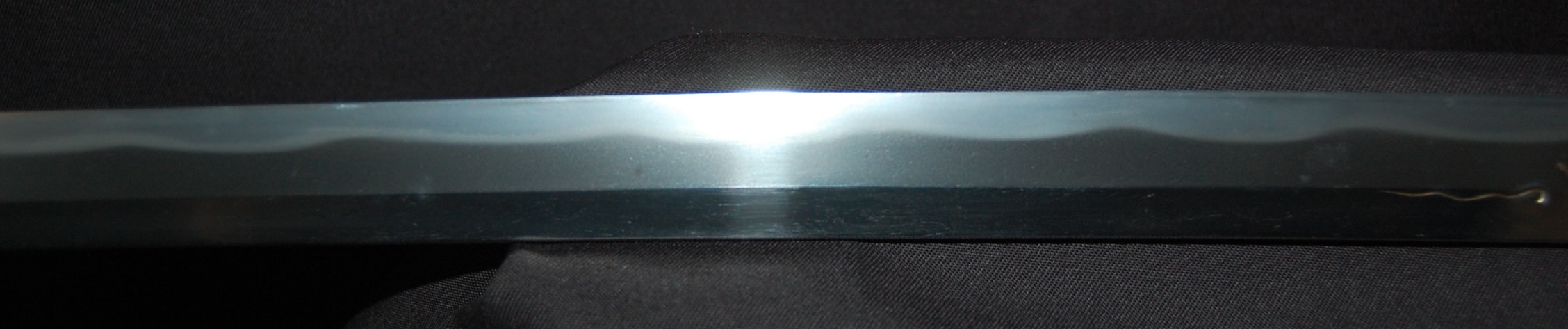
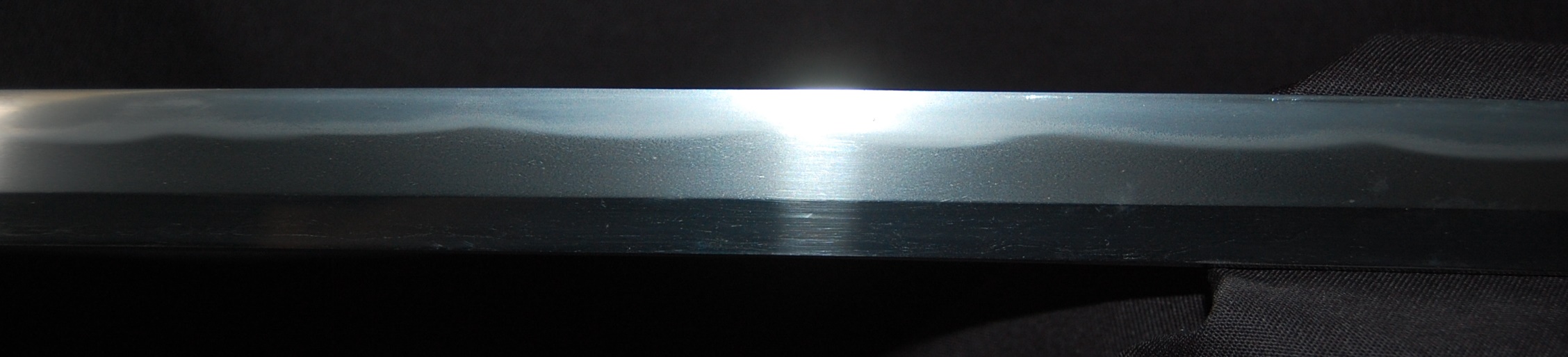
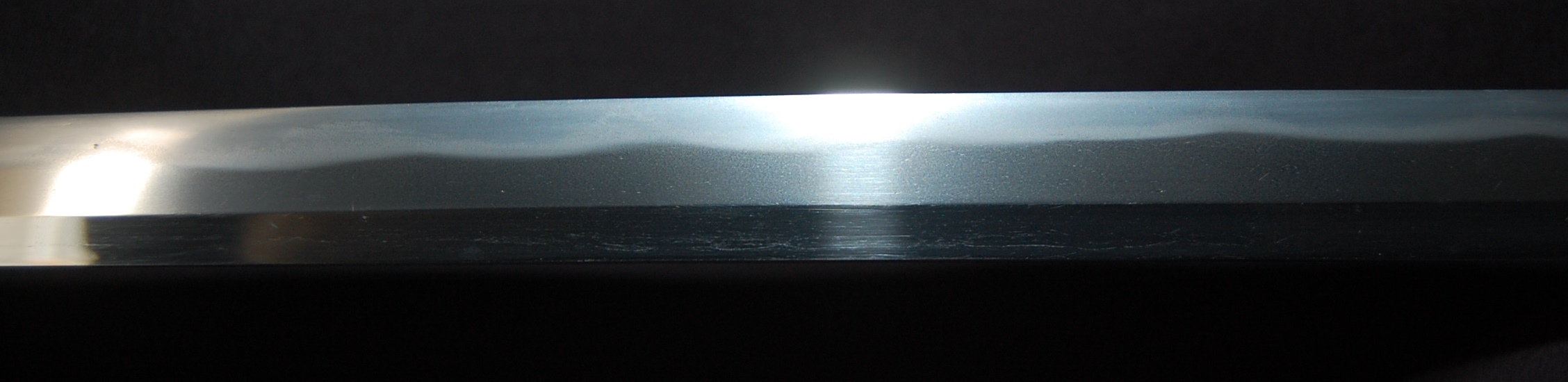
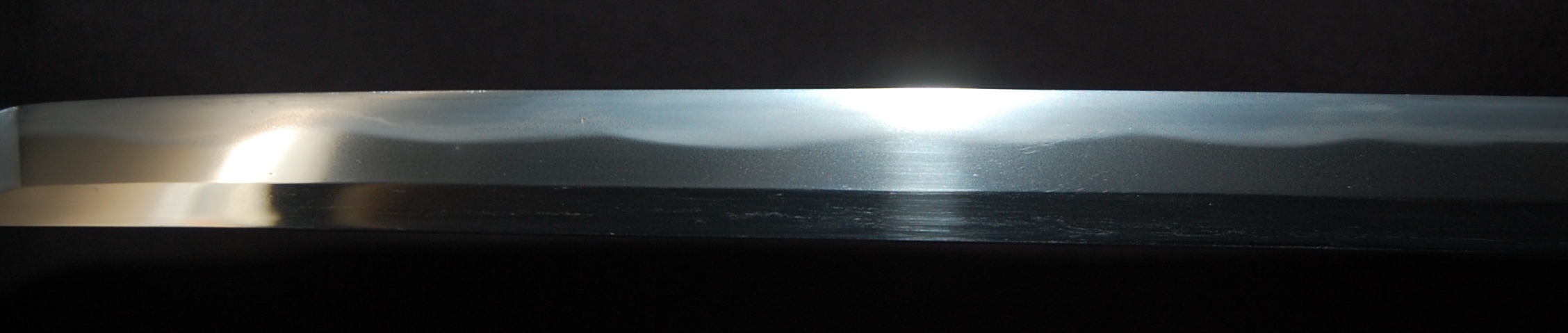
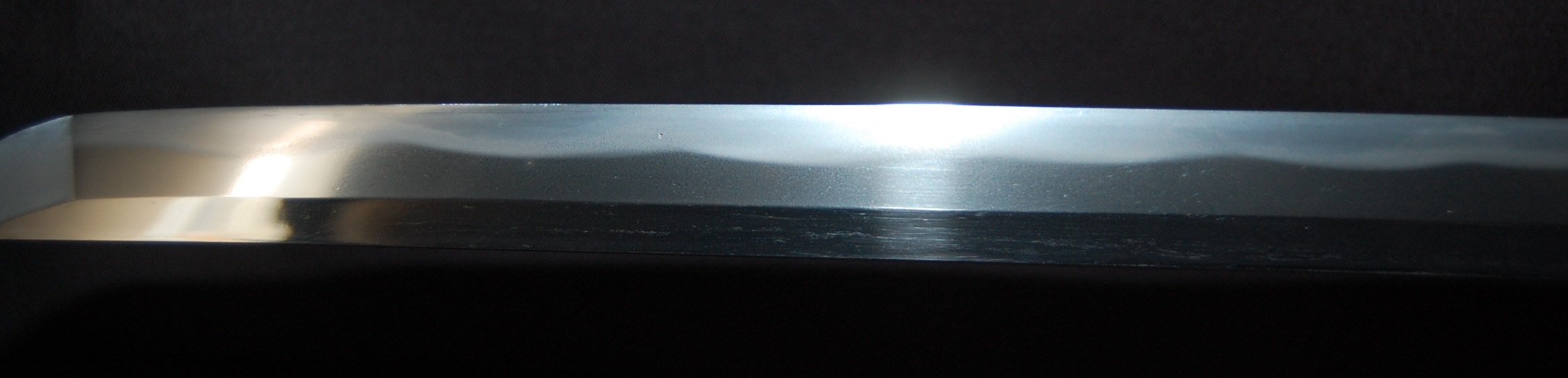
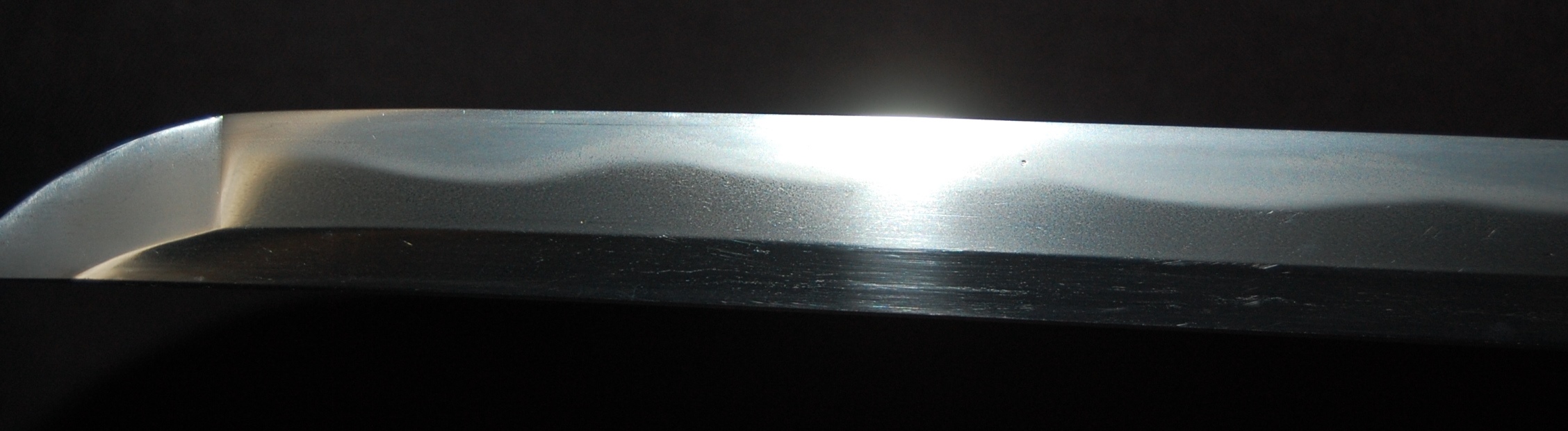
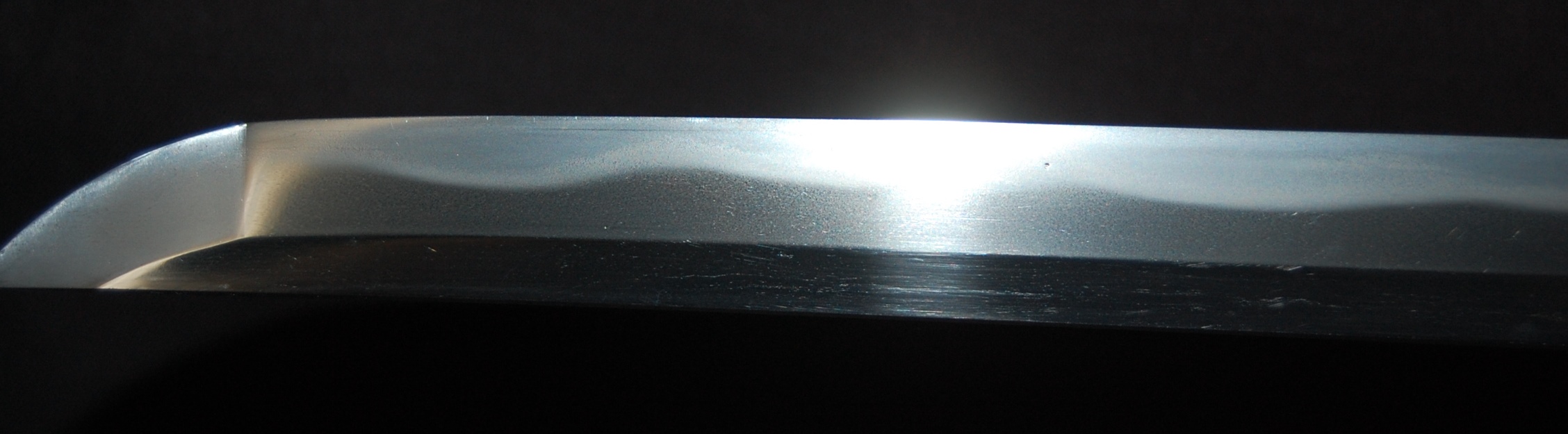
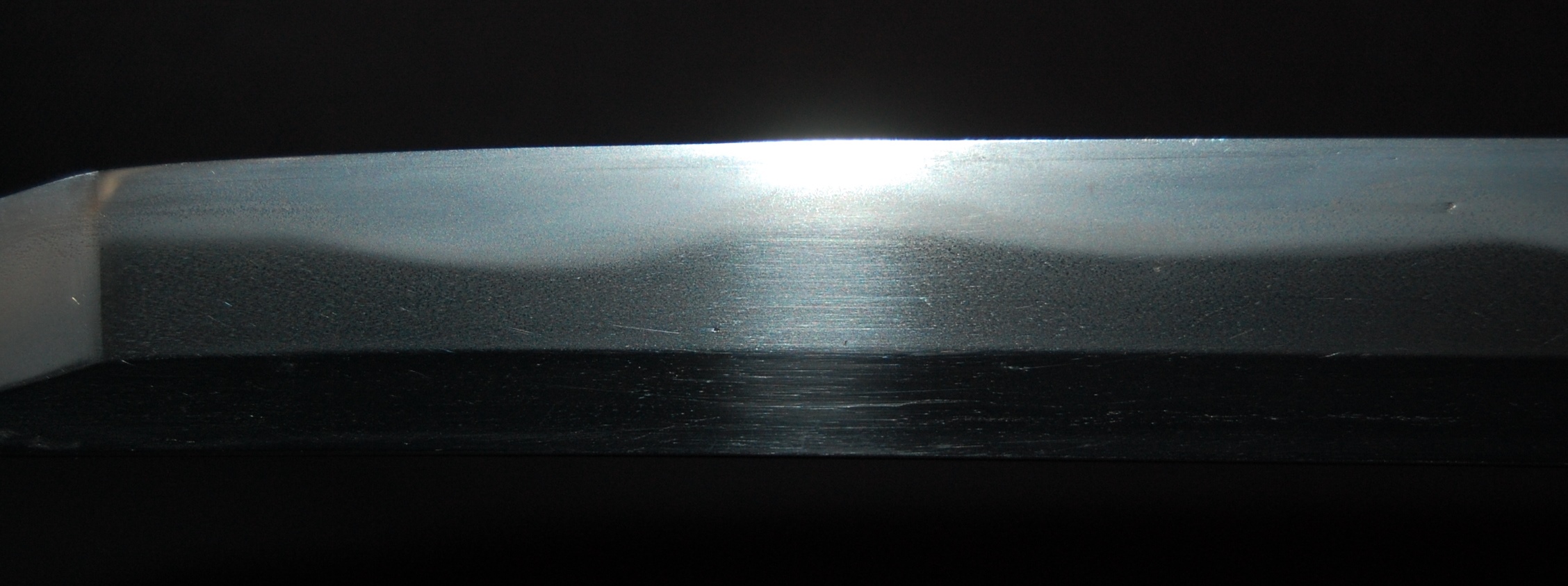
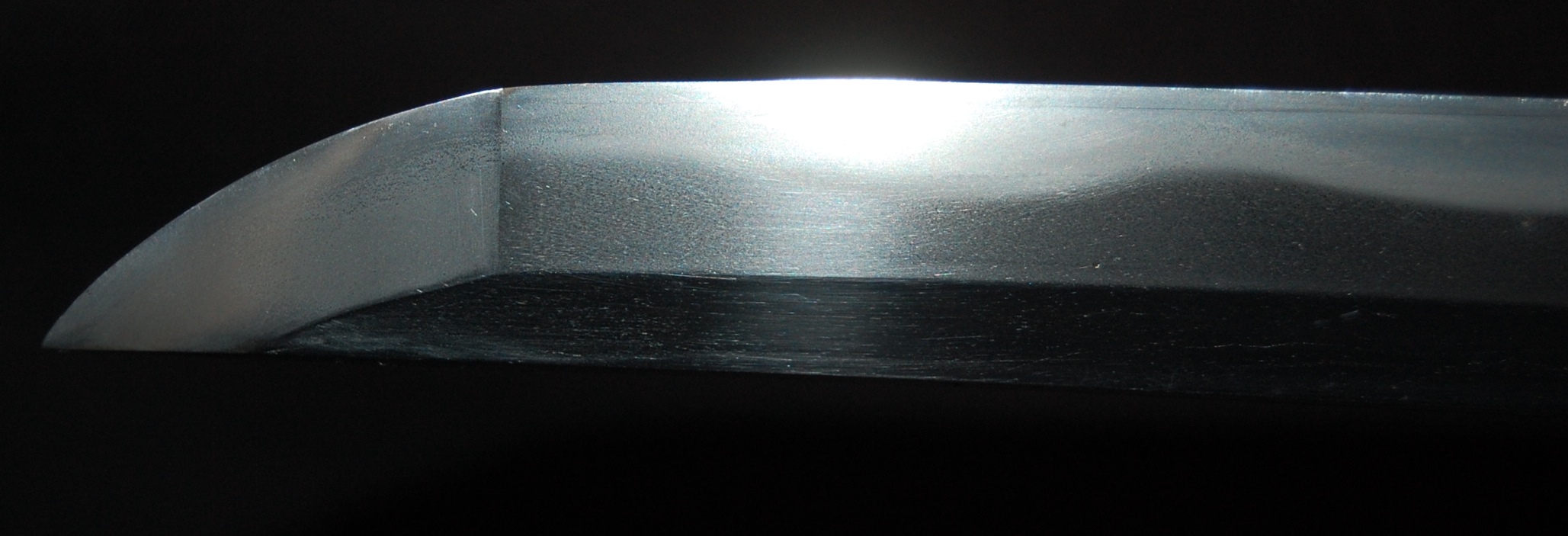
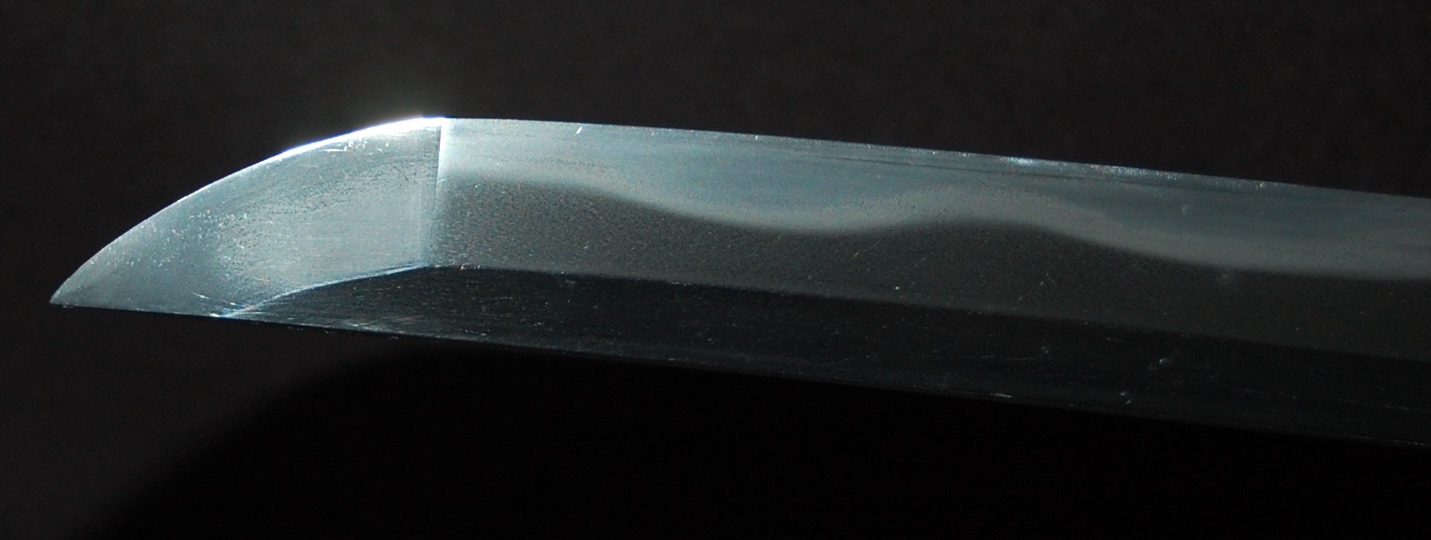
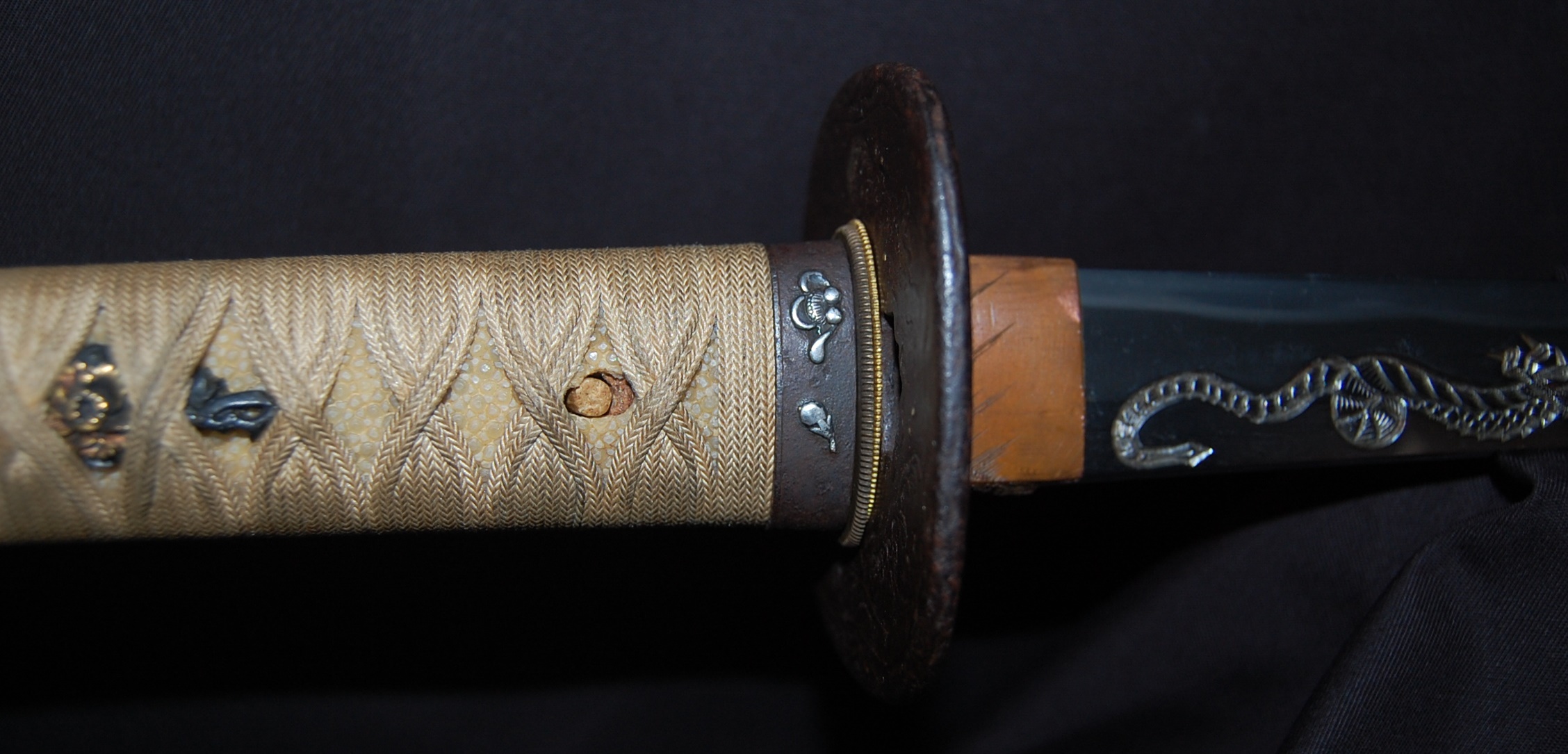
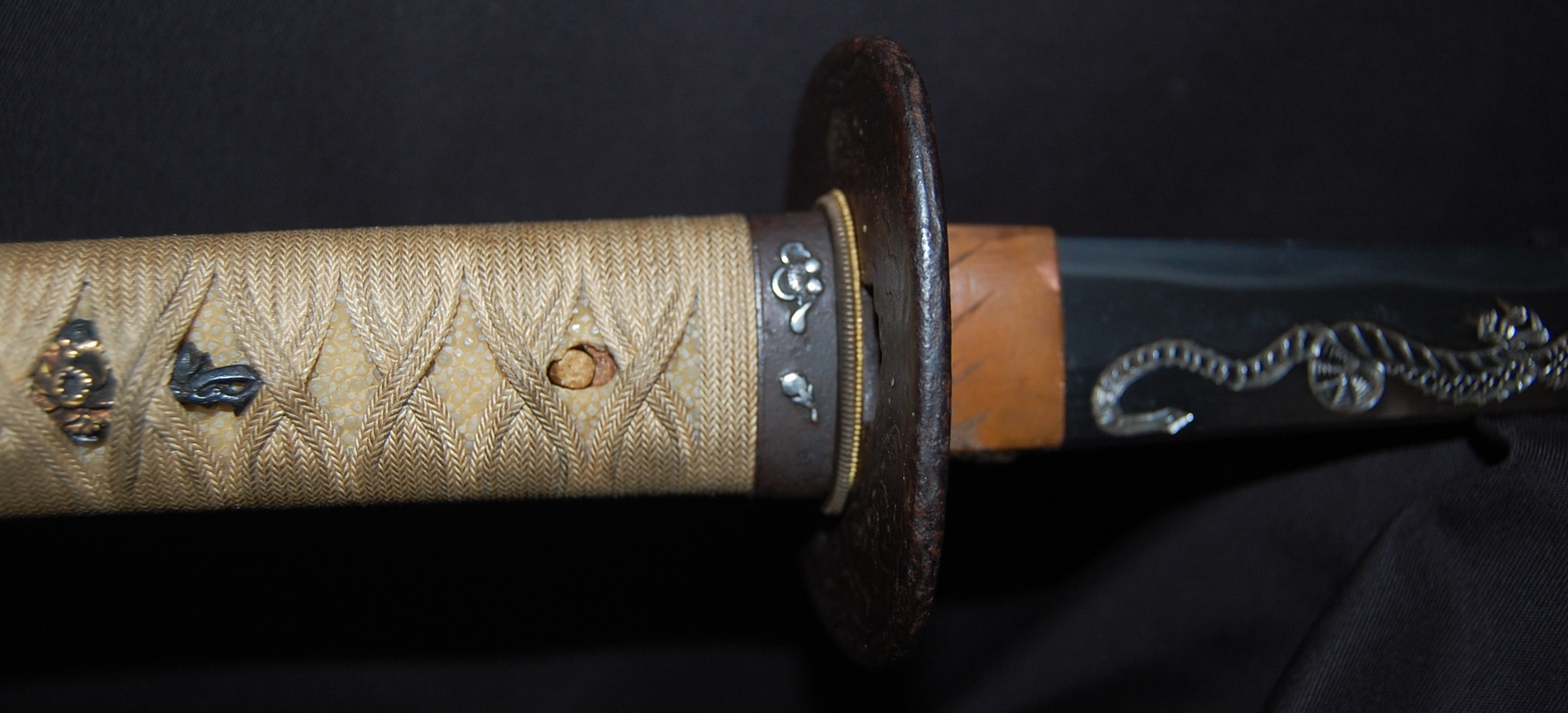
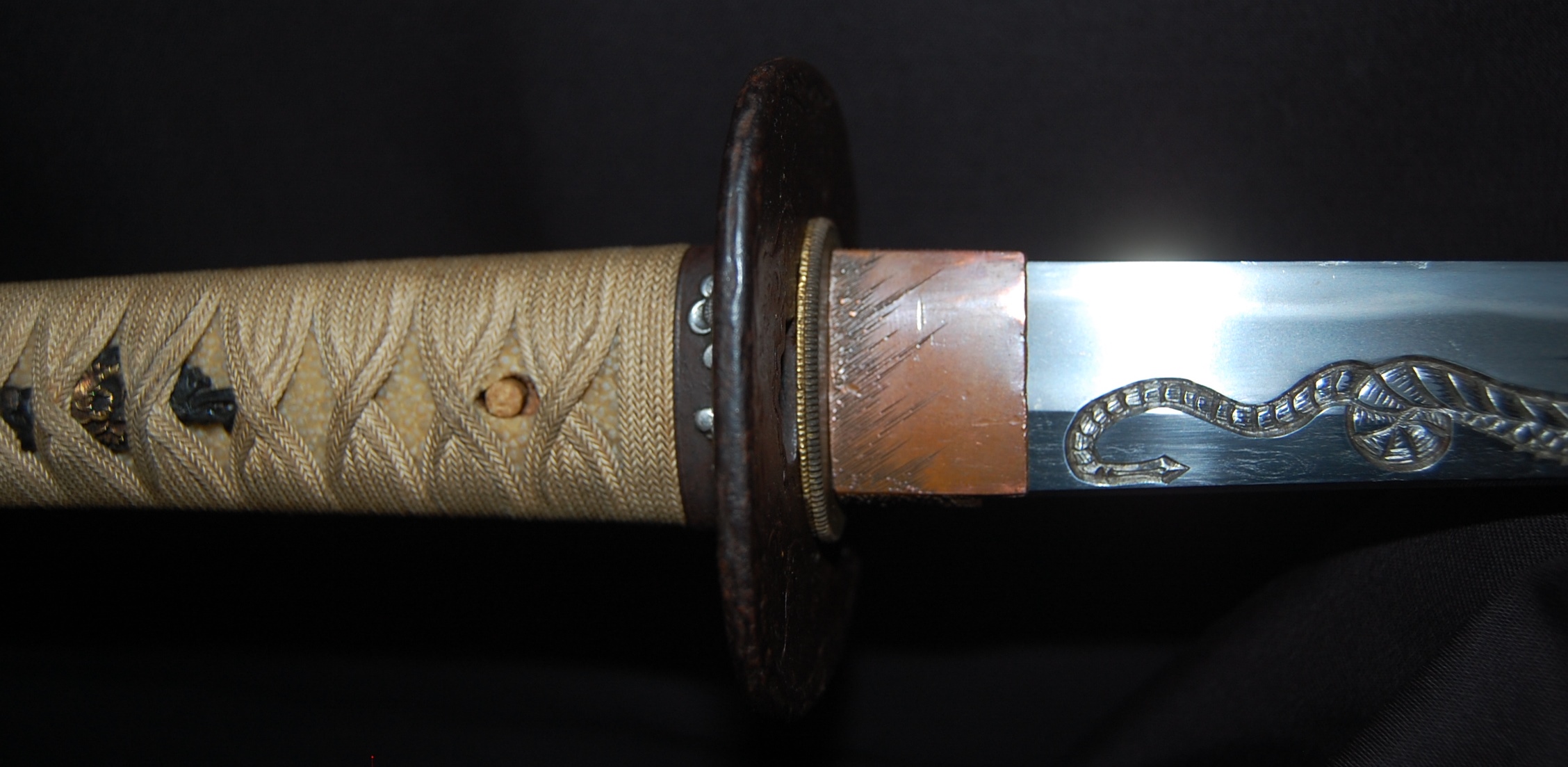
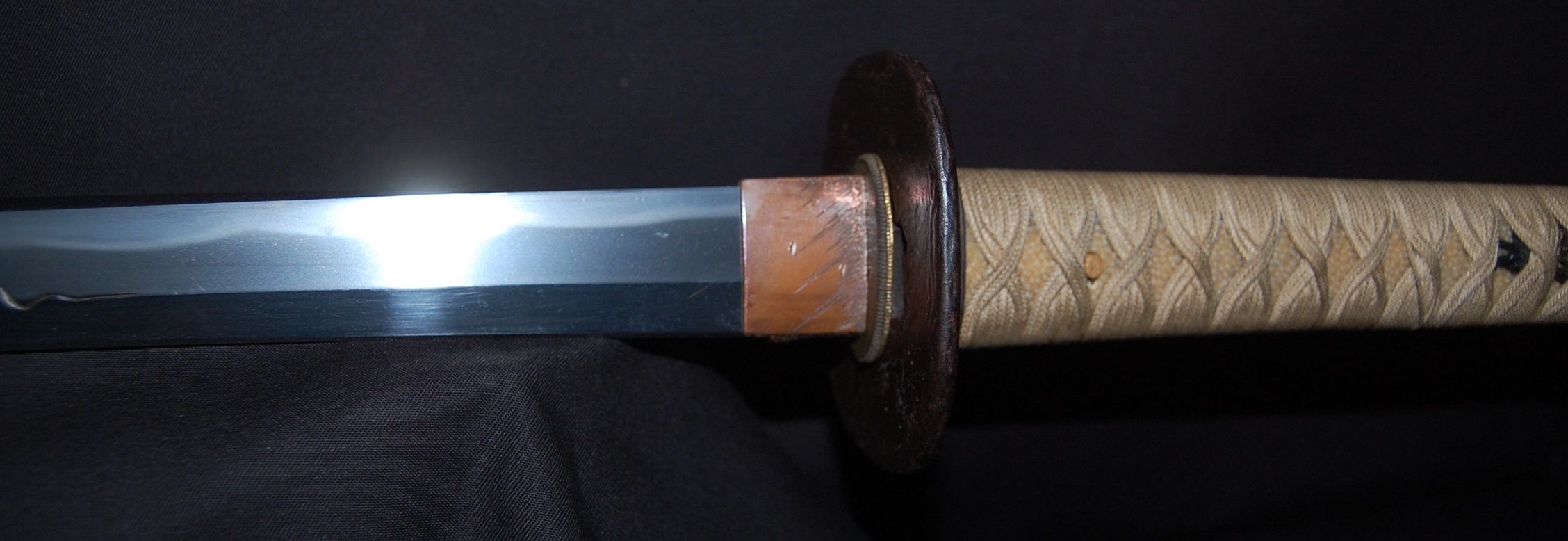
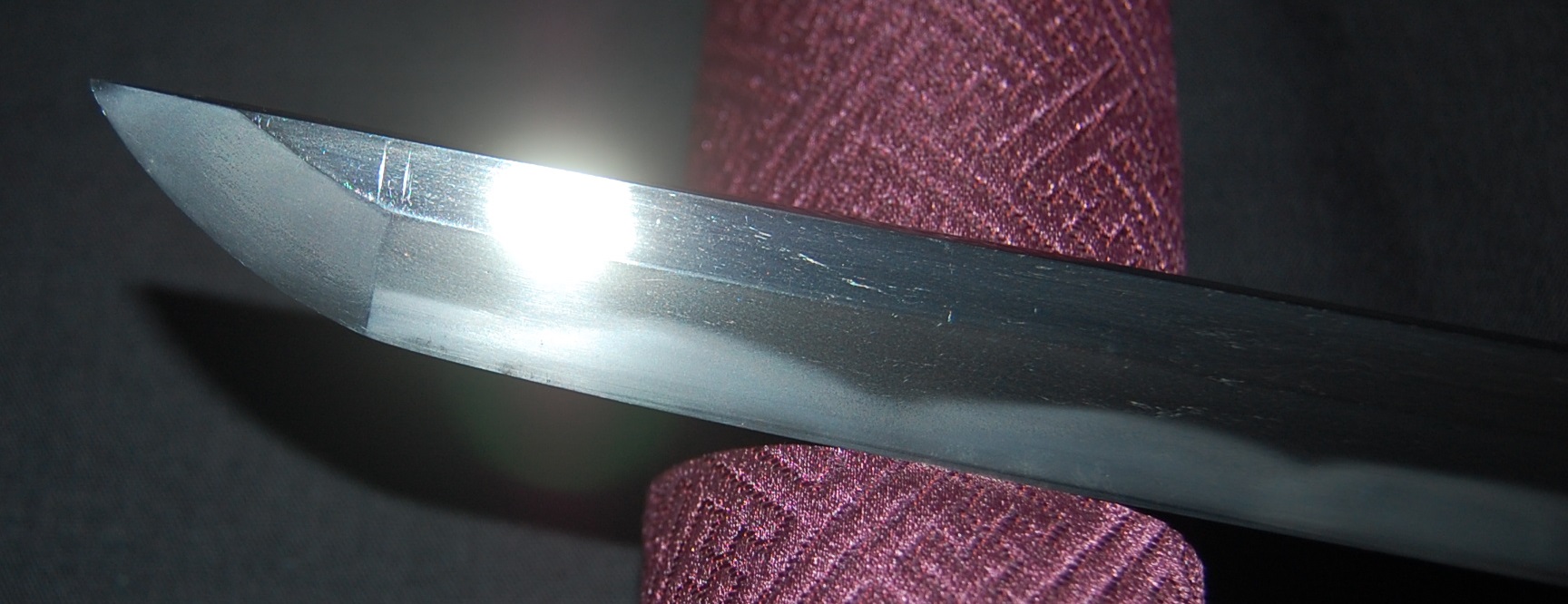
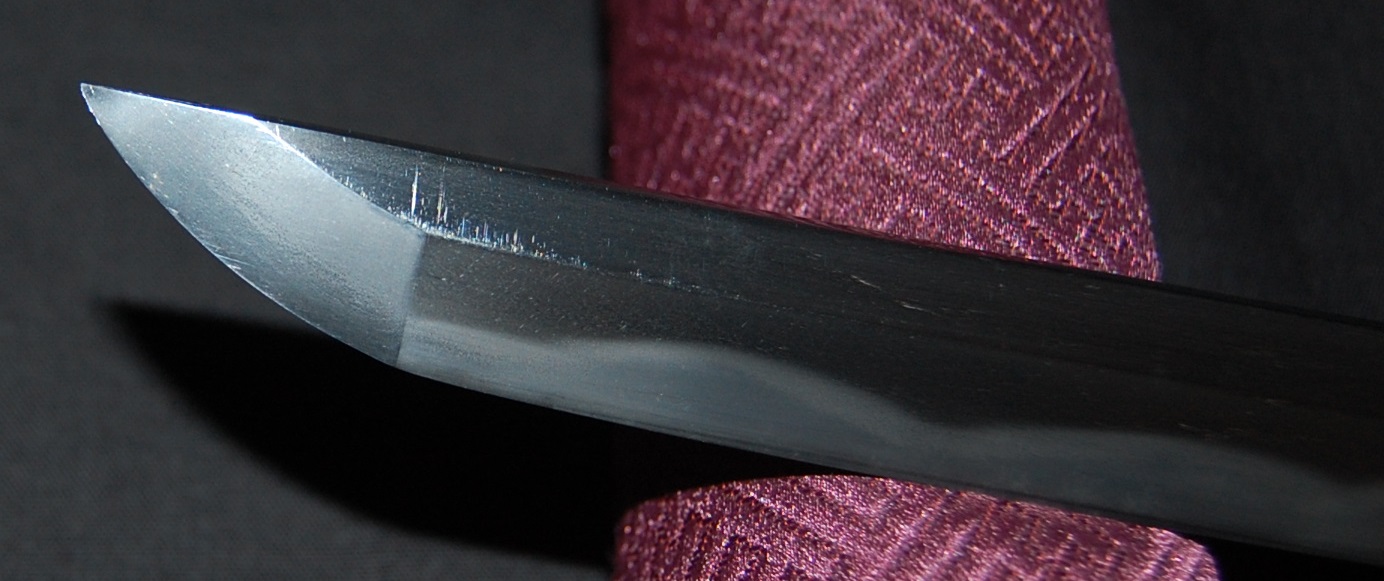
This katana has a tight Ko-Itame hada and a Hamon that is beautiful and constant throughout, it has a prominent Boshi with Sunagashi and other activities to enjoy. As well as the enjoyable Hada and Hamon, the blade has Horimono engravings on both sides: On the Omote side, it has the iconic Tama-oi-Ryu motif which shows a Ryu dragon chasing Hoju orbs. On the Ura side, it has a rather long Bonji Sankrit, the translation currently unknown but both Horimono are very well done.
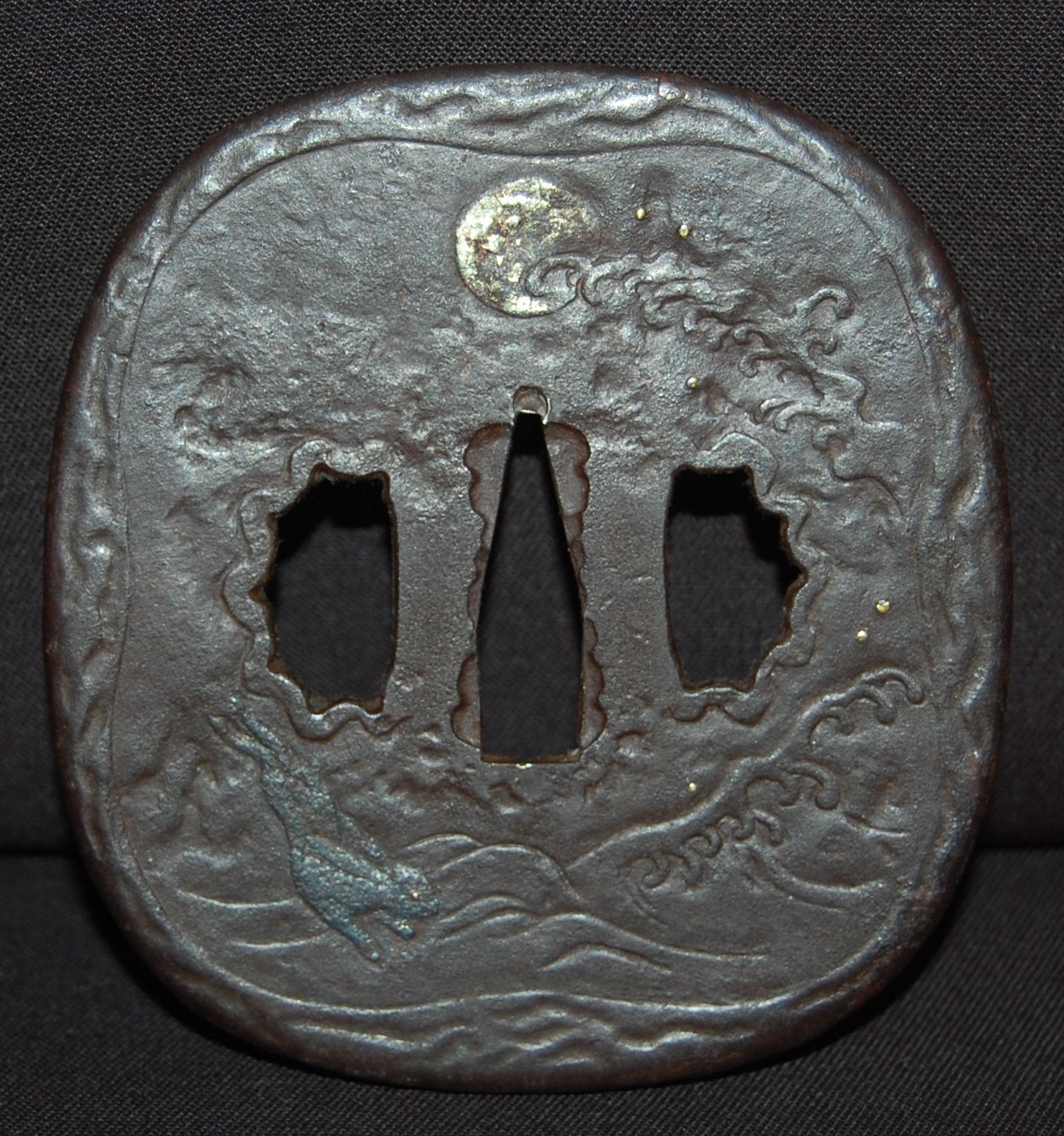
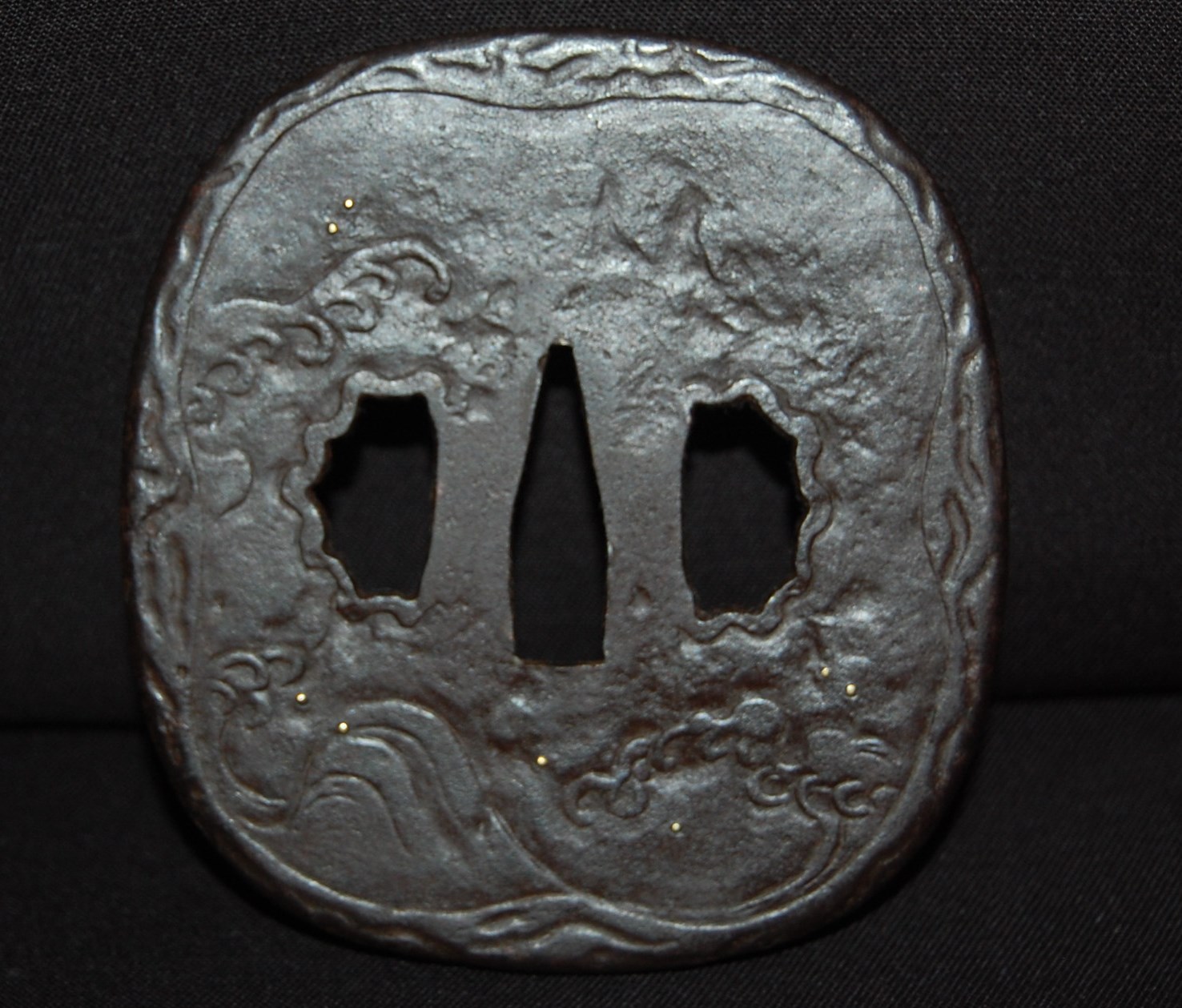
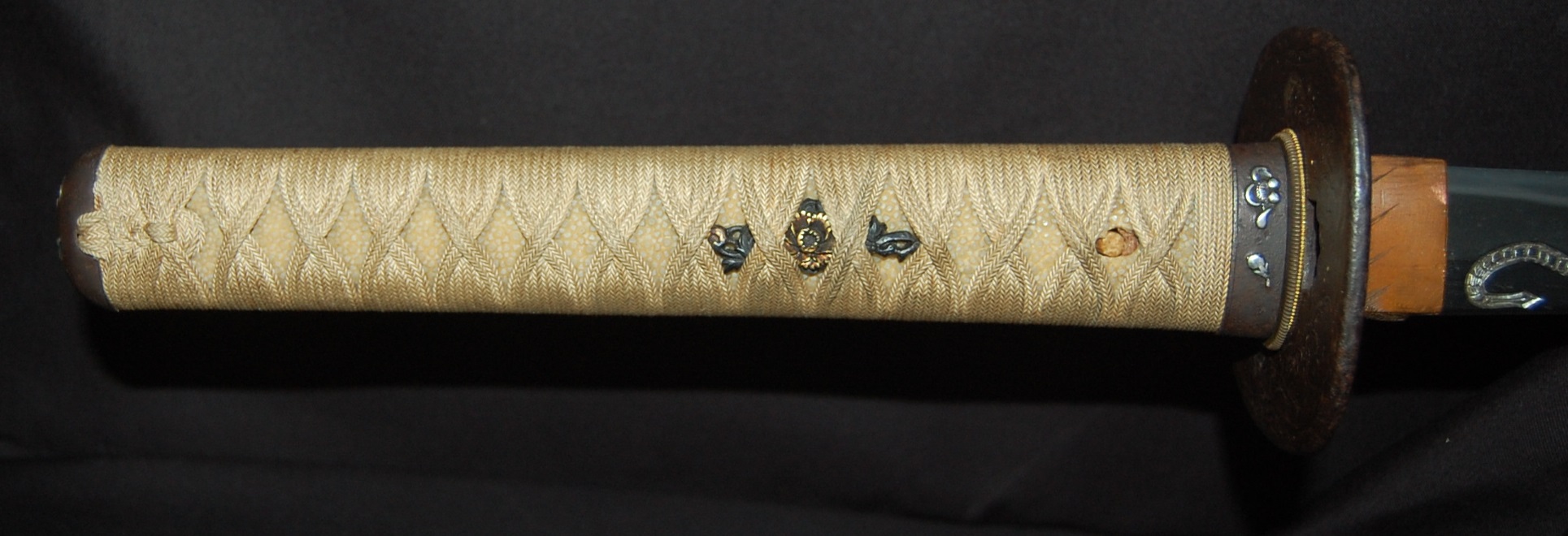
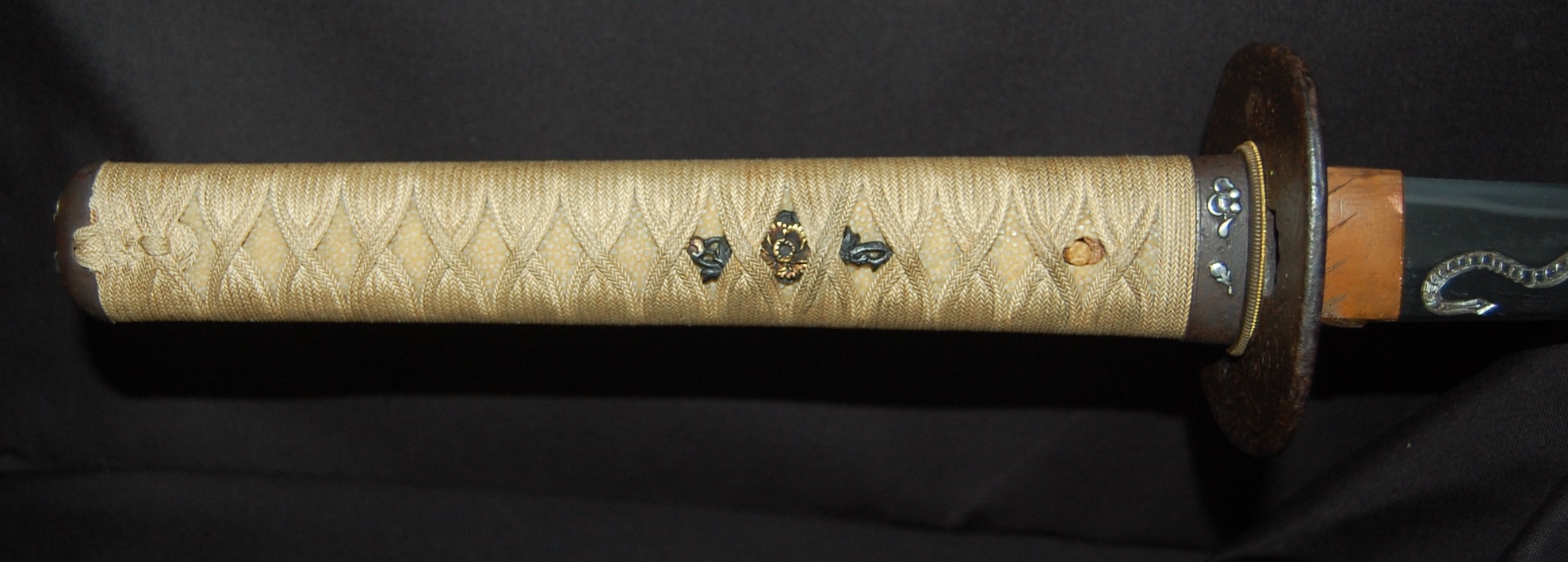
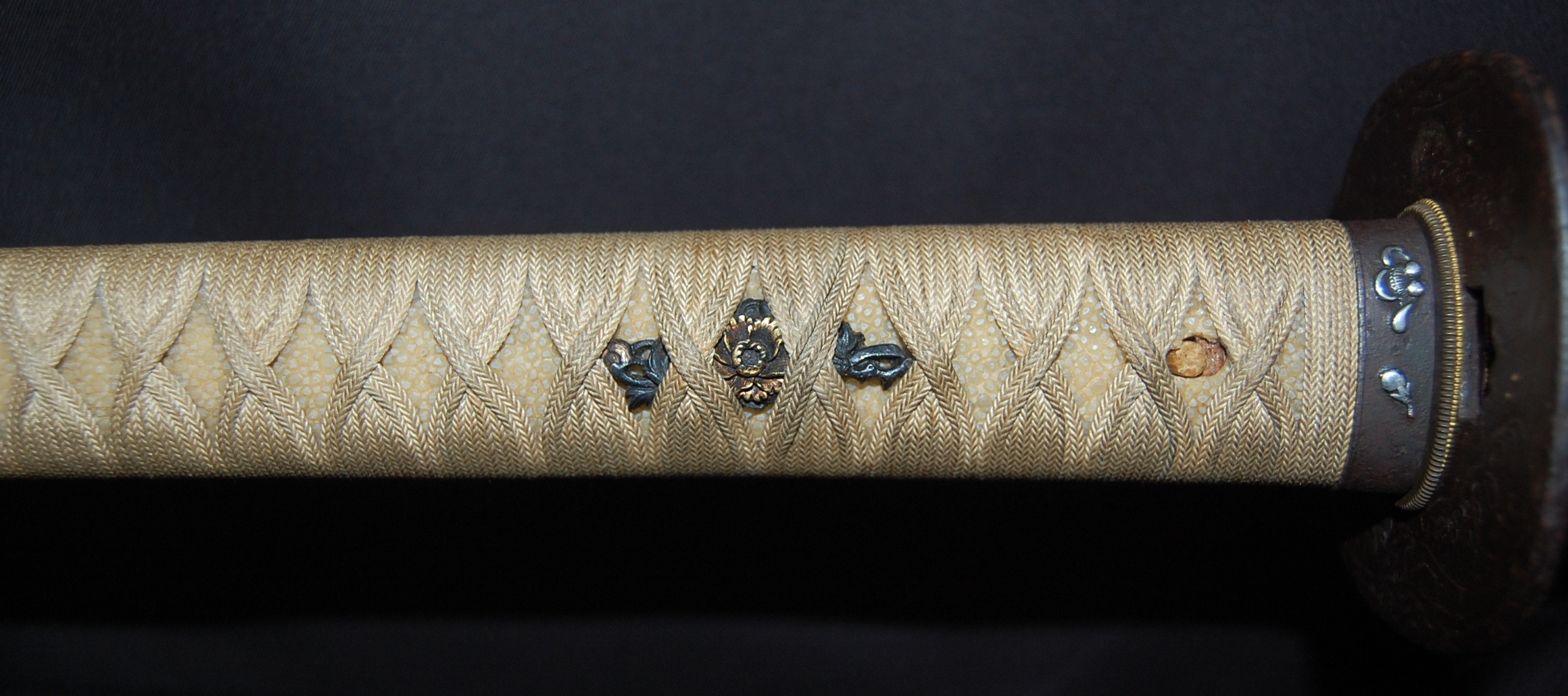
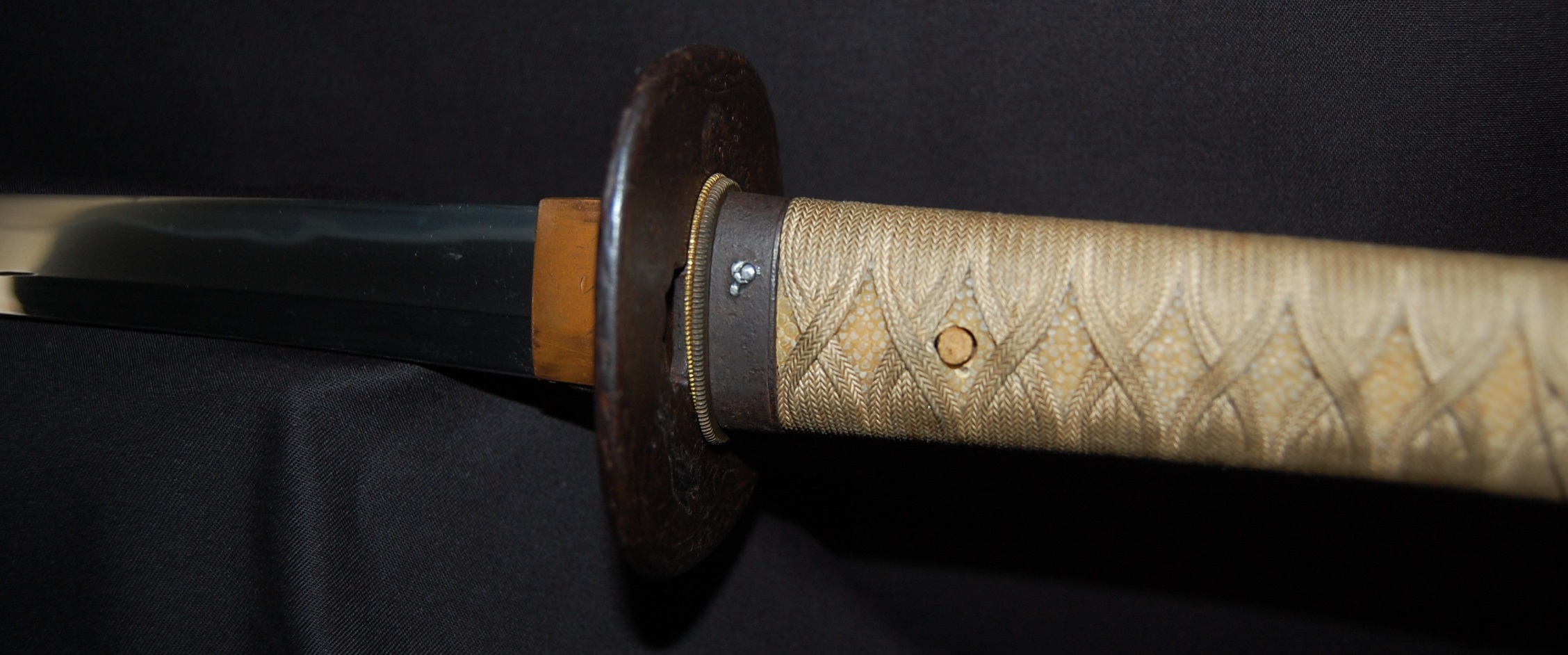
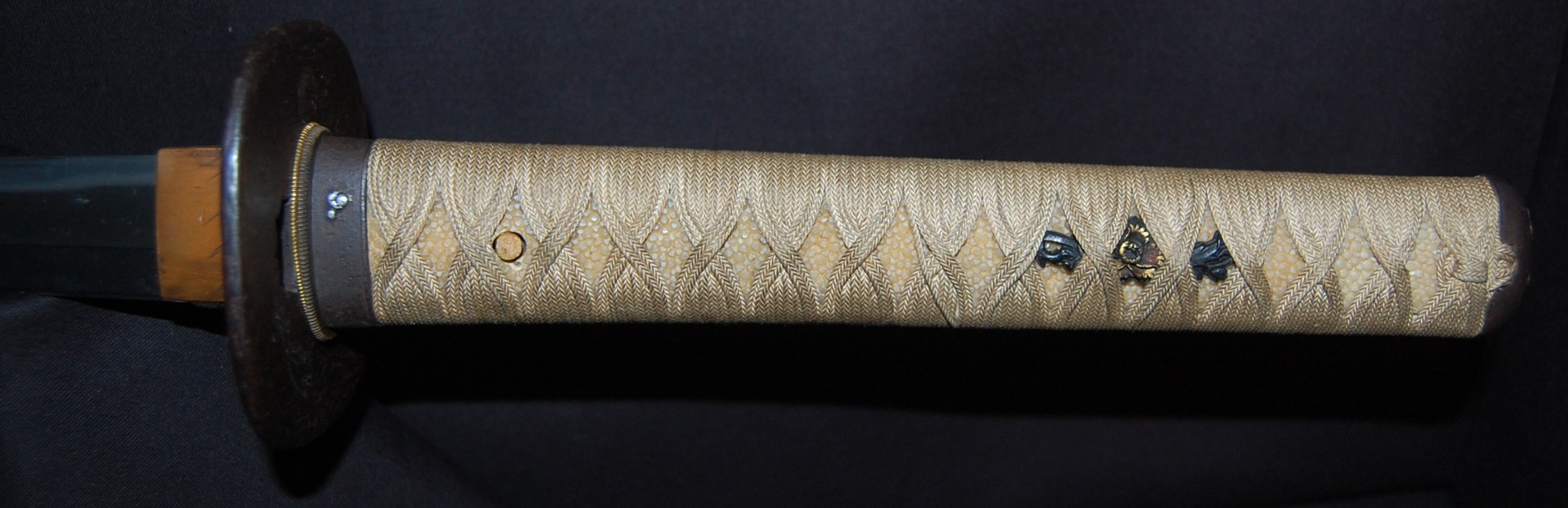
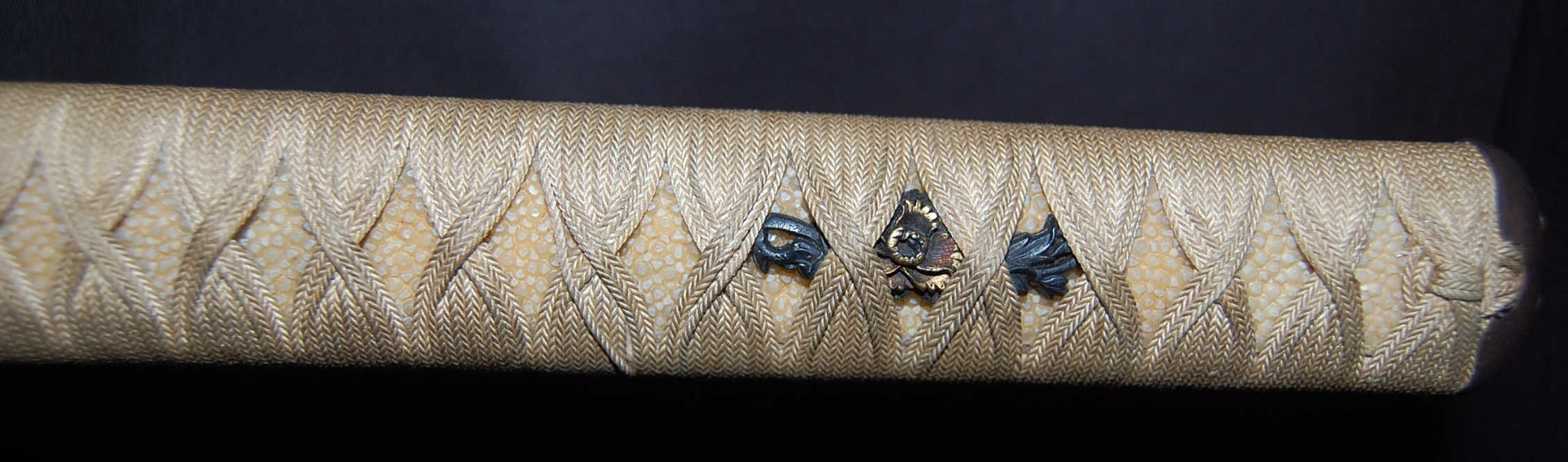
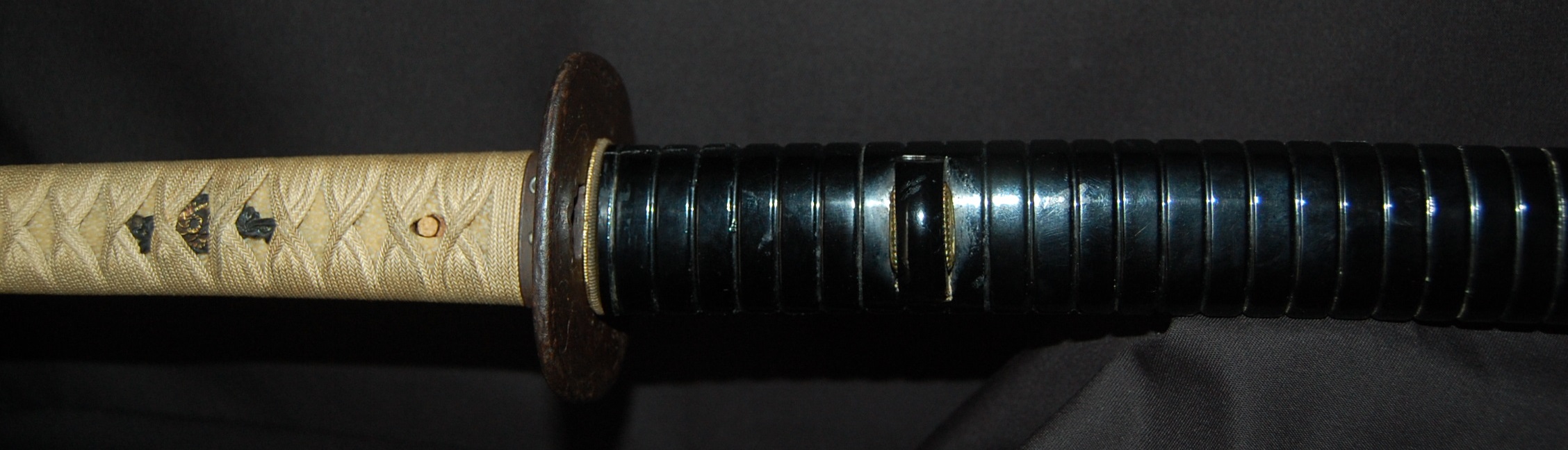
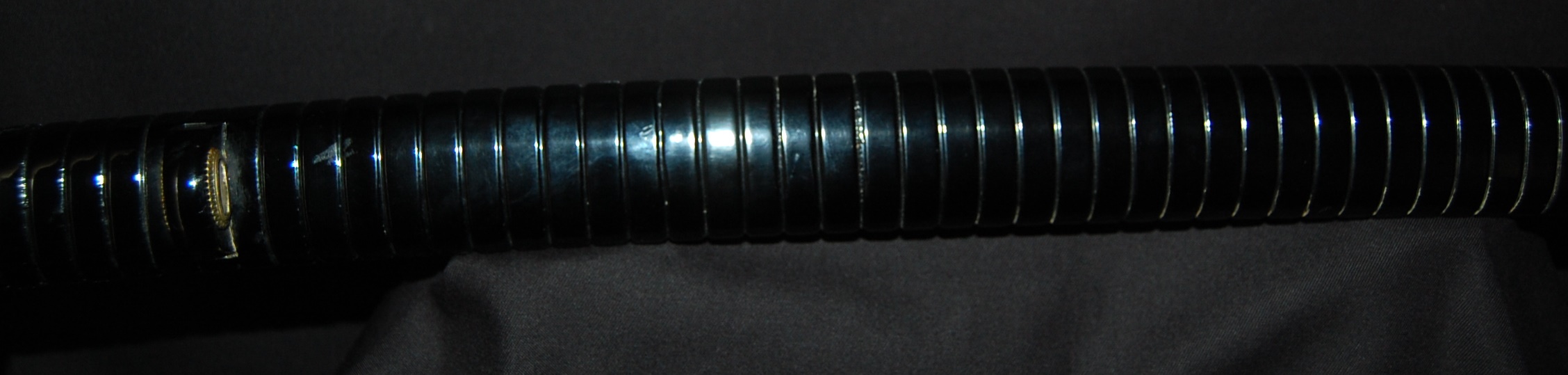
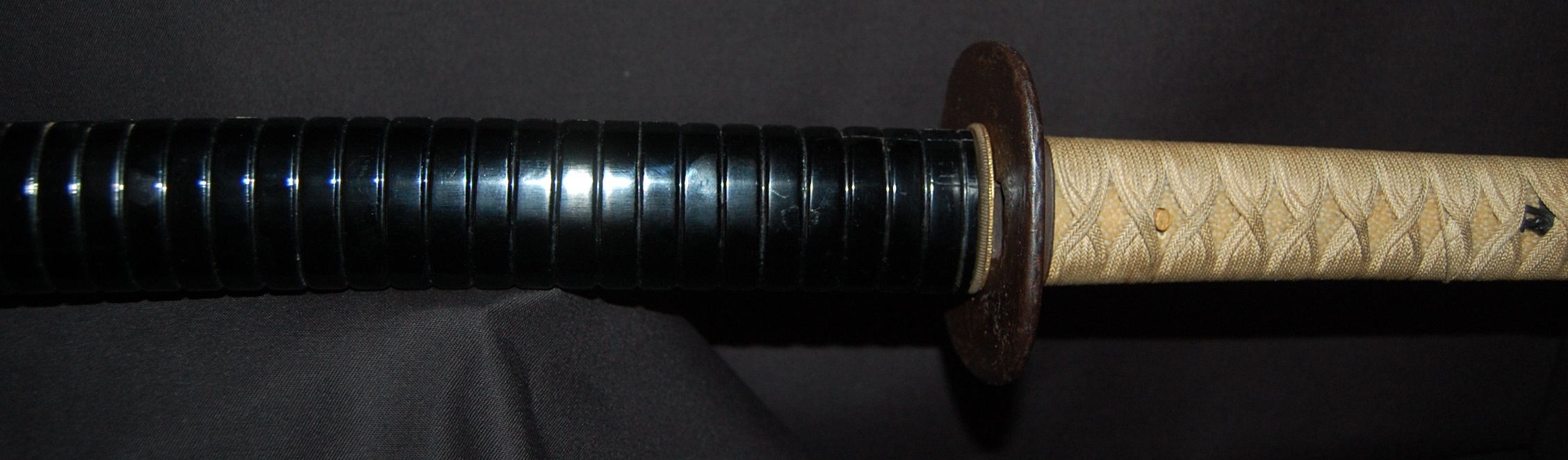
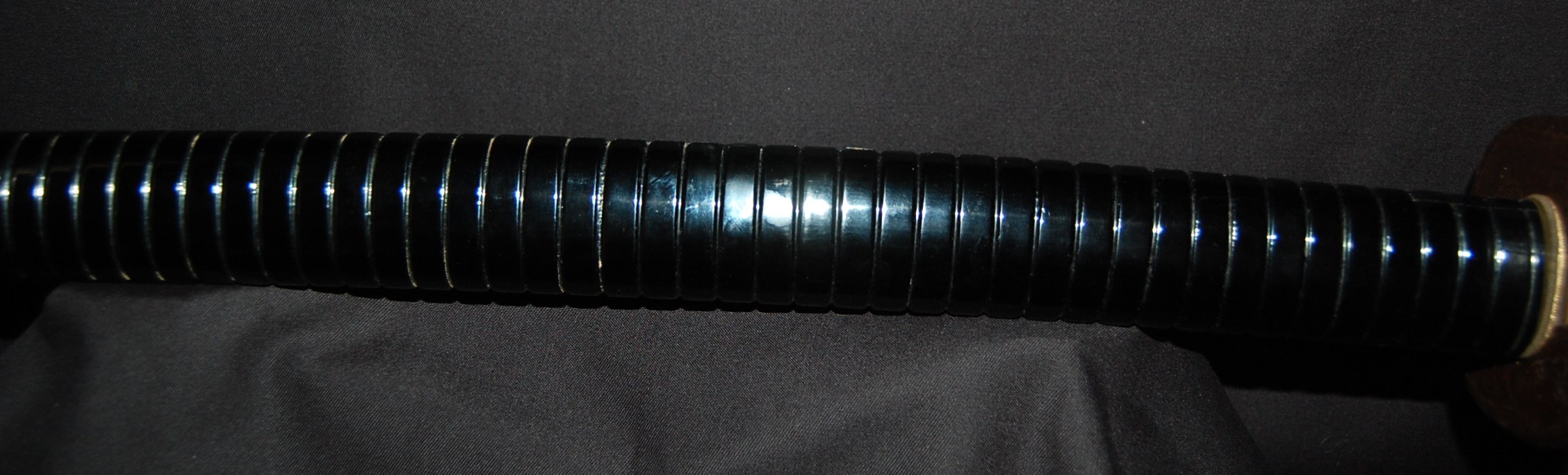
The Koshirae is also very enjoyable. The iron Tsuba, in a classic Nami ni Usagi motif, which originated from the ancient poem Chikubu-shima, depicting a rabbit dancing on the waves under the moon, is excellently forged and engraved. The Tsuka, wrapped in a gorgeous and complicated Jabara-maki style Tsukamaki, mounted with iron Fuchikashira with silver Ume flower engraving, is a very neat and clean set. The black lacquer Saya is engraved and applied with a variation style Inro-nuri style design.
The Tanba no Kami Yoshimichi smith originated in Yamashiro during the early Edo period.
The first generation Yoshimichi was the 3rd son of Kanemichi of Mino.
There’s two major branch of the smith with a dozen different generations, more research awaits.
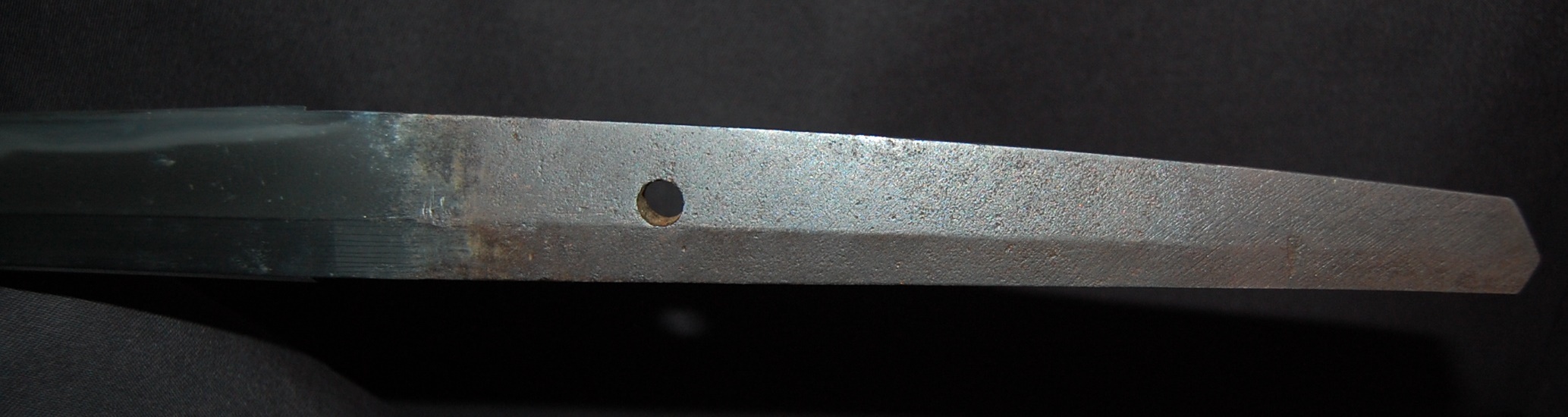
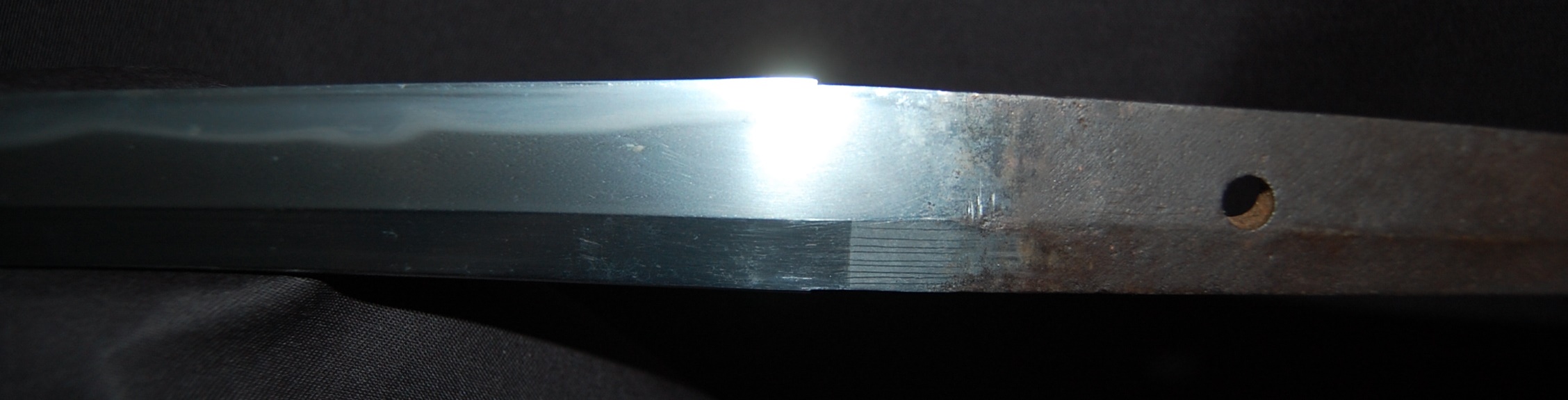
A beautiful blade with very vivid Hamon and tight Hada that has plenty of activities. The polish itself is very good, though suffering from a few minor rust spots and stains due to long term storage, no serious imperfection or damages. Koshirae fittings are well fitted and solid with no damage.
Period – Edo
Paper – No Origami
Mei – Tanba no Kami Yoshimichi
Nagasa – 69.5 cm
Sugata – Shinogi-zukuri
Sori – 1.8 cm
Kissaki – Chu
Mune – Iori
Kasane – 0.6 cm
Mihaba – 3 cm
Nakago – Ubu
Mekugi Anna – 1
Hamon – Nie-deki
Boshi – Ko-maru with Sunagashi
Hada – Tight ko-Itame